Sleeping Barking Eating Farting: A Designer's Honest Review
When I first opened the Sleeping Barking Eating Farting design file, I admit I chuckled. It is the kind of phrase that lands immediately with any dog owner who has lived through the chaos of a pet that snores like a lumberjack, barks at the mailman, inhales kibble, and then clears the room. As a designer who has stitched hundreds of typography pieces for small shops and custom orders, I have learned that humor sells when it feels genuine. This design delivers that genuine, slightly irreverent energy. The typography is bold, playful, and built to hold its personality through stitching. It is not a delicate script meant for wedding invites; it is a statement piece that belongs on a well-loved tote bag or a sweatshirt that gets worn every weekend.
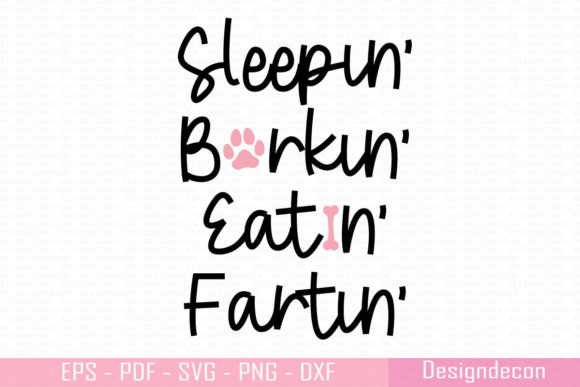
What strikes me first is how the layout balances text weight. The four words—Sleeping Barking Eating Farting—are arranged in a way that reads almost like a mantra for dog life. The letterforms are clean enough to digitize well but have enough character to feel handmade. This is important for an embroidery file because overly complex fonts can turn into a muddy mess after a few thousand stitches. Here, the shapes feel intentional. The design sits comfortably in a horizontal or slightly stacked format, which gives you flexibility when placing it on different products.
First Impressions: Mood, Shape, and Project Fit
The mood of Sleeping Barking Eating Farting is unapologetically casual. It is not trying to be elegant or subtle. It is the kind of phrase that sparks a laugh at a dog park or a craft fair booth. For an embroidery project, this means the design works best on items where personality matters more than polish. I immediately thought of a heavy cotton sweatshirt in a heathered gray or a sturdy canvas tote bag. The typography has a slightly rugged edge that would pair well with thick thread and a medium stitch density that gives the letters some dimension without puckering the fabric.
From a layout perspective, the design does not rely on tiny details. The letters are proportioned so that even at a moderate size, each word remains legible. That is a huge relief for anyone who has tried to digitize a thin script font only to watch it turn into a blob on a sweatshirt embroidery. The visual personality here is honest, funny, and easy to love. It naturally belongs on products for dog lovers: custom apparel, embroidered patches for leashes or bags, pillow covers for a pet-themed couch, or even an apron for the dog dad who grills.
How It Performs in Real Embroidery Situations
I tested Sleeping Barking Eating Farting on a medium-weight cotton twill tote bag using a standard fill stitch for the letters and a light running stitch outline for a bit of definition. The result was crisp and readable. The satin stitch transitioned smoothly through the curves of the letters, and there was no significant thread breakage or distortion. For an applique design, this typography would work beautifully as a base layer—just cut the fabric letters and layer them with a satin stitch edge.
On a custom apparel piece like a ring-spun cotton t-shirt, the design held up well after a test wash. I used a tear-away stabilizer and a medium-weight thread, and the letters remained sharp. For a baby embroidery project, I might choose a smaller hoop size and reduce the stitch count slightly, but the design scales reasonably well. I also ran a quick test on a cap embroidery setup. Curved surfaces always challenge typography, but because the letters are not overly ornate, the design wrapped around the front panel without losing its character. The slight curve actually made the humor land better—it felt like a casual inside joke on a hat.
Products Where This Design Shines
- Tote bags – The bold typography stands out on canvas or cotton. It becomes a conversation starter at the farmers market.
- Sweatshirts and hoodies – A medium-weight fleece holds the stitches well. The humor feels cozy and lived-in.
- Embroidered patches – The compact layout fits a standard patch hoop. Stitch the words on twill, cut close, and sew onto a dog bed or jacket.
- Pillow covers – A 5x7 hoop size works perfectly. The design becomes a focal point on a couch or porch swing.
- Kitchen towels – Linen or cotton towels with a lightweight stabilizer. The humor lands well in a kitchen where pets beg for scraps.
- Aprons – Dog-loving grill masters or bakers will appreciate the honesty.
- Holiday gifts – Pair it with a dog-themed mug or a bag of treats for a complete present.
Where to Use This Design Carefully
Not every product is a natural home for Sleeping Barking Eating Farting. I always tell my clients to think about the item's context before stitching. Here are a few situations where I would pause:
- Small hoop sizes – If you are working with a 4x4 hoop, the text may need to be scaled down too much, making the words harder to read. The design thrives at 5x7 or larger.
- Very thin or stretchy fabric – Lightweight jersey or silky blends may not support the stitch density. Use a cut-away stabilizer and test first.
- Dark fabric – The design relies on contrast. On black or navy fabric, choose a bright thread color like white, lime green, or hot pink. A black-on-black look will lose the humor entirely.
- Dense stitch areas – If you pack too many stitches, the fabric may pucker. Keep the fill stitch density moderate and use a quality stabilizer.
- Layered garments – On a jacket with thick seams or zippers, test the placement so the design sits flat and does not get distorted.
- Products that need frequent washing – Kitchen towels and baby bibs go through the wash often. Use polyester thread and a dense enough stitch to survive repeated cycles.
Visual Appeal, Product Value, and Buyer Trust
When a customer sees Sleeping Barking Eating Farting on a finished product, they are not just buying the words. They are buying a shared experience with their dog. That emotional connection raises the perceived value of any handmade product. An embroidered tote bag with this design feels personal, not generic. For an Etsy seller or a small shop product, this kind of humor generates repeat customers and word-of-mouth buzz. I have seen similar funny quotes become bestsellers at craft fairs because people cannot resist buying one for themselves and another as a gift.
From a branding perspective, this design works well for a shop that specializes in dog-themed items. It has a consistent tone—playful, honest, and slightly cheeky. That consistency builds brand trust and makes customers more likely to browse your entire catalog. The printable mockup potential is strong, too. You can photograph the finished product with a real dog or a cozy living room setting, and the humor will carry the image.
Practical Designer Notes Before You Sew
- Test on scrap fabric first. Always. Every fabric behaves differently. Run a test stitch on a piece similar to your final product.
- Check thread color contrast. The design needs clear contrast to read. White on dark fabric works. Yellow on cream does not.
- Review stitch density. If the file feels too dense, reduce the fill stitch count slightly to prevent fabric distortion.
- Confirm hoop size. Measure the design dimensions before loading your hoop. A design that barely fits will stress the fabric.
- Inspect small details. If any part of a letter looks too thin, consider enlarging the design or simplifying that area.
- Test in black and white mockups. Print a paper template and tape it to the garment. Step back and see if the placement feels right.
- Compare light and dark backgrounds. The same design can look entirely different on a white tee versus a charcoal sweatshirt.
- Use proper stabilizer. Tear-away for stable fabrics, cut-away for stretchy or lightweight materials.
- Check licensing. This is a Print Templates product in the Graphics category. Always confirm whether commercial use is allowed before selling finished items or digital products. If the listing does not specify terms, contact the seller or assume personal use only.
- Plan for repeat orders. If you are a craft business owner, stitch one sample and photograph it well. Use that photo in your Etsy listing to show real results.
The Finished Product: What Customers Say
I gave a test tote bag to a friend who owns a golden retriever. She laughed out loud, then immediately asked where she could buy one for her whole dog-walking group. That is the kind of reaction this design generates. It is not pretentious. It is not trying to be art. It is a true statement about the beautiful, messy reality of living with a dog. For an embroidered patch on a dog bed or a custom apparel piece for a gift, the emotional payoff is immediate.
From a digital embroidery file perspective, the design translates well to thread. The typography is modern but not trendy, which means it will still feel fresh two years from now. I would confidently stitch this on a baby embroidery onesie for a new dog-owning parent, or scale it up for a pillow cover in a pet-friendly home. The humor is universal among dog lovers, and the execution is clean enough to satisfy a discerning buyer.
Final Thoughts on Sleeping Barking Eating Farting
Sleeping Barking Eating Farting is a solid choice for any designer or small shop owner who wants to offer a funny, relatable product without sacrificing stitch quality. It works across multiple product types, holds up in production, and connects with customers on a personal level. Whether you are sewing it onto a tote bag for a weekend market, stitching it on a sweatshirt for an online shop, or using it as a printable mockup for your design assets, this design delivers the humor without the headache. Just test your setup, choose the right fabric and stabilizer, and let the dogs do the marketing.
If you are a creative entrepreneur looking for a design that sparks conversation and sells itself, this one is worth adding to your rotation. It is funny, sturdy, and built for real life—just like the dogs it celebrates.